ai-today.org

The AI industry.

Track the companies, funding and business decisions shaping artificial intelligence. Every headline links to its original publisher.

Feeds refreshed every 15 minutes

1257 stories foundClear filters
Published

“We were looking at it wrong”: The explosive claim that’s upended the AI world (opens in a new tab)

“I think I have good news about the nature of neural networks.” With those simple words of optimism, Nick Cammarata, a researcher at the AI startup Goodfire, kicked off a 26,000-word blog post that has knocked the AI world on its head, sparking wild speculation as well as cautio…

Read at MIT Technology Review (opens in a new tab)
Image: MIT Technology Review
MIT Technology ReviewStory image unavailable

More matching stories

Page 79 of 126
Image: Phys.org
Phys.orgStory image unavailable
Published

Why the ugly history of IQ testing matters for AI and education (opens in a new tab)

OpenAI CEO Sam Altman has recently been discussing "artificial general intelligence" that matches or surpasses human capabilities. This is from the same person who has said children born today (including his own) will "never be more intelligent than AI, from a 'raw IQ'" (intelli…

Read at Phys.org (opens in a new tab)
Image: AWS Machine Learning
AWS Machine LearningStory image unavailable
Published

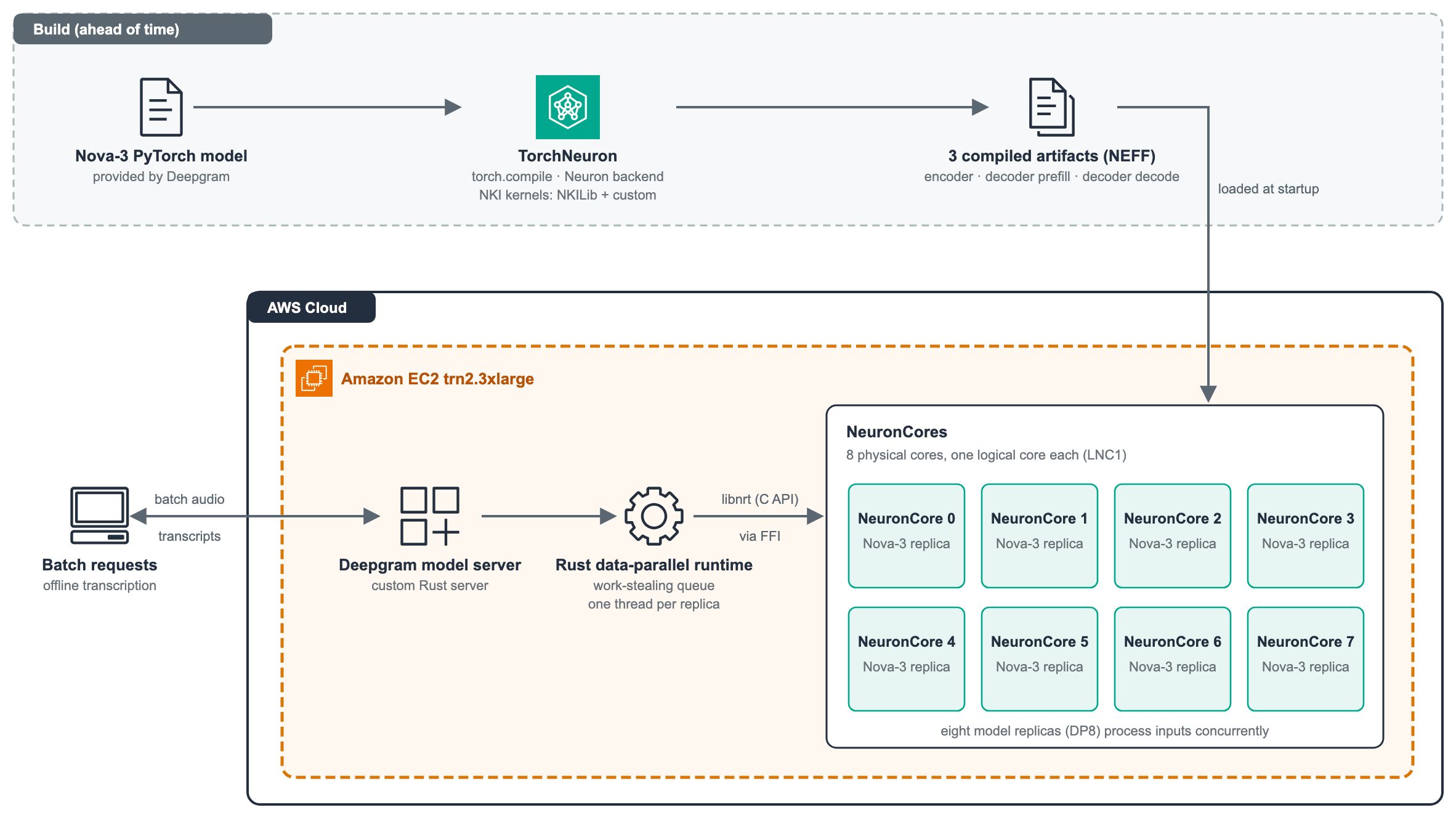
How Deepgram optimized voice AI at scale with AWS Trainium (opens in a new tab)

Deepgram worked with the AWS Forward Deployed Engineering team to port its Nova-3 speech-to-text model to AWS Trainium2 for offline batch inference. This post covers porting to the AWS Neuron stack, kernel-level tuning, a data-parallel Rust runtime, and the throughput and cost r…

Read at AWS Machine Learning (opens in a new tab)
Image: Phys.org
Phys.orgStory image unavailable
Published

'24/7 unmanned synthesis platform' uses robots and light to produce drug candidates (opens in a new tab)

Even when AI designs molecules with potential as medicines, drug development can be delayed if the process of producing them is slow. KAIST researchers have developed an "unmanned synthesis platform" that uses synthesis robots and light to automatically carry out the entire proc…

Read at Phys.org (opens in a new tab)
Image: Google Cloud (official)
Google Cloud (official)Story image unavailable
Published

Building full virtual vehicles on Google Cloud: From AAOS to the smallest MCU (opens in a new tab)

Imagining traditional gearheads getting their hands on software-defined vehicles is an amusing thought experiment. With their socket wrenches and air compressors at the ready, they might be confused to encounter core functions more likely to run on 1s and 0s than oil and belts.…

Read at Google Cloud (official) (opens in a new tab)
Image: Quanta Magazine
Quanta MagazineStory image unavailable
Published

AI Proved the Quasi-Riemann Hypothesis. What Happens Now? (opens in a new tab)

Unlike other recent AI proofs, this one has been unpacked by human experts. The implications, one mathematician said, are “staggering.” The post AI Proved the Quasi-Riemann Hypothesis. What Happens Now? first appeared on Quanta Magazine

Read at Quanta Magazine (opens in a new tab)
Image: Phys.org
Phys.orgStory image unavailable
Published

X-rays reveal surprisingly long-lived spin waves in copper oxide (opens in a new tab)

Today's computer technology, based on silicon chips, is slowly reaching its physical limits. Components cannot be miniaturized indefinitely, and clock speeds cannot be increased indefinitely. At the same time, huge AI data centers are being built in many places, and these consum…

Read at Phys.org (opens in a new tab)
Sources 34 publishers

Headlines link to the original reporting. Article dates show publication time; the refresh time shows when feeds were last checked.

About our sources & editorial standards
Feeds last refreshed

Some feeds are delayed; saved stories remain available.