ai-today.org

Intelligence, in focus.

Research, releases, and industry news. Direct from the source.

Feeds refreshed every 15 minutes

Published

'24/7 unmanned synthesis platform' uses robots and light to produce drug candidates (opens in a new tab)

Even when AI designs molecules with potential as medicines, drug development can be delayed if the process of producing them is slow. KAIST researchers have developed an "unmanned synthesis platform" that uses synthesis robots and light to automatically carry out the entire proc…

Read at Phys.org (opens in a new tab)

Image: Phys.org
Phys.orgStory image unavailable

Latest news

Page 142 of 221
Image: Google Cloud (official)
Google Cloud (official)Story image unavailable
Published

Who judges the judge? Three helpful ways to audit your LLM evaluators (opens in a new tab)

Is your LLM-as-a-judge truly objective? There’s a common misconception in tech that humans are subjective, so we should rely on AI for objective evaluation. But the reality is that LLMs are also subjective. Just like human reviewers, they can carry biases: Verbosity bias: LLM ju…

Read at Google Cloud (official) (opens in a new tab)
Image: Google Cloud (official)
Google Cloud (official)Story image unavailable
Published

Developer’s guide to implementing MCP apps in Gemini (opens in a new tab)

Enterprise assistants still respond mostly in text. However, that can break down for visual, multi-step work, where every adjustment costs another slow chat turn. MCP Apps ( SEP-1865 ) solves this. This open Model Context Protocol (MCP) extension pairs a tool with a live UI. In…

Read at Google Cloud (official) (opens in a new tab)
Image: Google Cloud (official)
Google Cloud (official)Story image unavailable
Published

Building full virtual vehicles on Google Cloud: From AAOS to the smallest MCU (opens in a new tab)

Imagining traditional gearheads getting their hands on software-defined vehicles is an amusing thought experiment. With their socket wrenches and air compressors at the ready, they might be confused to encounter core functions more likely to run on 1s and 0s than oil and belts.…

Read at Google Cloud (official) (opens in a new tab)
Image: Quanta Magazine
Quanta MagazineStory image unavailable
Published

AI Proved the Quasi-Riemann Hypothesis. What Happens Now? (opens in a new tab)

Unlike other recent AI proofs, this one has been unpacked by human experts. The implications, one mathematician said, are “staggering.” The post AI Proved the Quasi-Riemann Hypothesis. What Happens Now? first appeared on Quanta Magazine

Read at Quanta Magazine (opens in a new tab)
Image: Phys.org
Phys.orgStory image unavailable
Published

X-rays reveal surprisingly long-lived spin waves in copper oxide (opens in a new tab)

Today's computer technology, based on silicon chips, is slowly reaching its physical limits. Components cannot be miniaturized indefinitely, and clock speeds cannot be increased indefinitely. At the same time, huge AI data centers are being built in many places, and these consum…

Read at Phys.org (opens in a new tab)
Image: Meta Engineering
Meta EngineeringStory image unavailable
Published

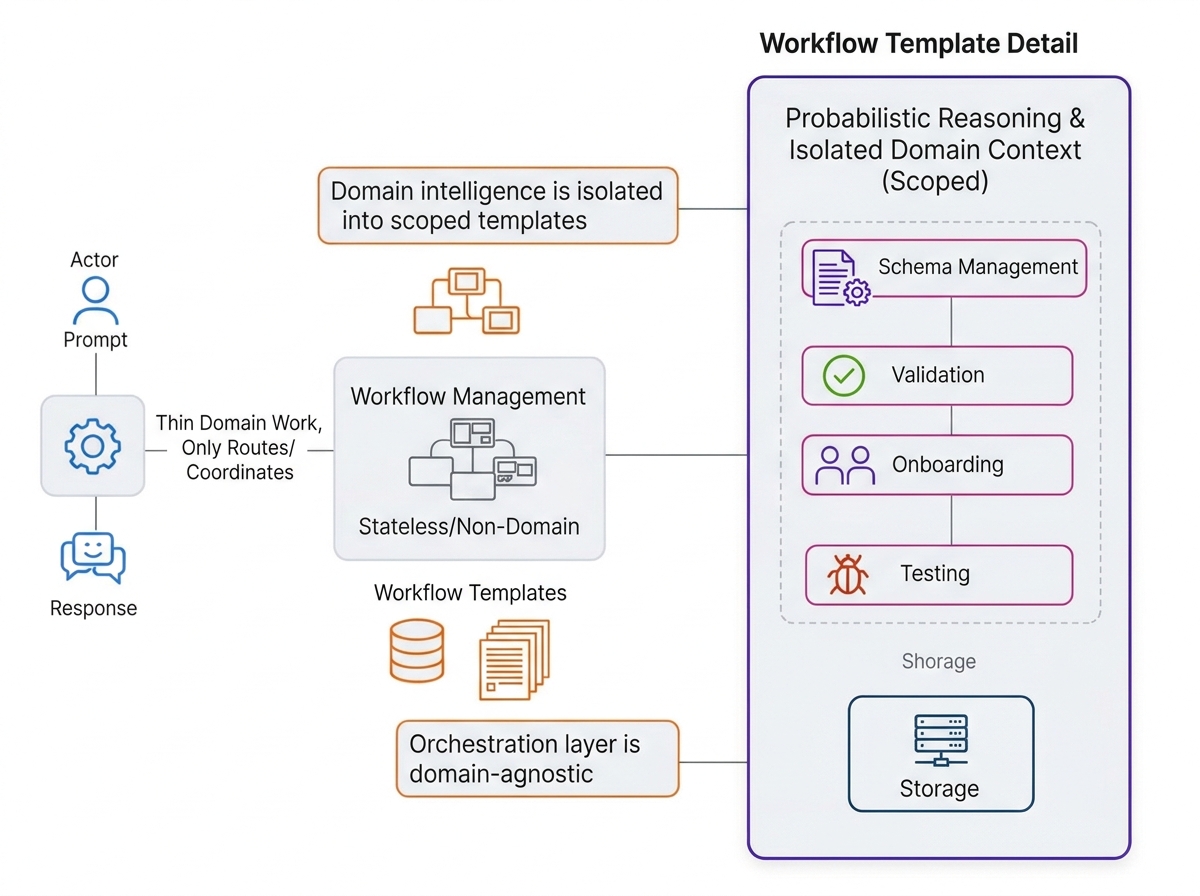
The Thin Orchestrator: How We Made Our AI Agents More Reliable by Giving the Router Less to Do (opens in a new tab)

Sometimes, giving an AI agent all of the knowledge it needs is the wrong approach. At Meta, we’ve seen notable improvements in efficiency and accuracy by keeping the orchestration layer of our data pipeline agents deliberately thin: It routes work and enforces reliability checks…

Read at Meta Engineering (opens in a new tab)
Sources 34 publishers

Headlines link to the original reporting. Article dates show publication time; the refresh time shows when feeds were last checked.

About our sources & editorial standards
Feeds last refreshed

Some feeds are delayed; saved stories remain available.